|
Mechanisms and biological interactions of ruthenium anticancer compounds
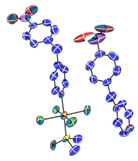
Ru(III) complexes are promising candidates for the next-generation of metal-based anticancer drugs. Two of these compounds, NAMI-A and KP1019 are currently undergoing phase II clinical trials. We are using a variety of methods to probe the in vivo behaviour of these compounds and their mechanisms of action. Our most recent results demonstrate the importance of serum-protein interactions to the speciation of these compounds, which lead to the maintenance of their Ru(III) oxidation state and influence aquation and oligomerization processes. |
|
|
Design and synthesis of new metal-based anticancer drugs targeting specific biomolecule interactions
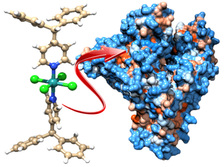
Inspired by our observations of non-coordinate interactions of ruthenium complexes such as NAMI-A and KP1019 with proteins, we are developing new Ru complexes with ligands specifically targeting hydrophobic protein binding. Our most recent studies demonstrate that hydrophobic interactions of ruthenium complexes with human serum albumin can be stabilized through ligand design. Ultimately, we are seeking to develop metallodrug-protein conjugates as selective anticancer agents. |
|
|
Development of redox-activated metal-based anticancer compounds for tumour targeting
A variety of metal ions provide redox couples within the ranges found in biological environments. These include ruthenium, copper, vanadium, and cobalt. When combined with redox-active ligands new anticancer drug candidates can be produced. These compounds can provide activity through the generation of ligand radicals and reactive oxygen species, in addition to more conventional routes such as binding to DNA. We are developing new complexes which are activated in hypoxic tumour environments for targeted anticancer activity. |
|
|
Application of EPR spectroscopy to the mechanisms of paramagnetic metallodrug candidates
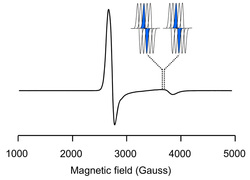
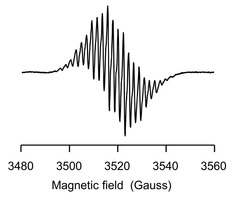
Electron paramagnetic resonance (EPR) spectroscopy provides unique insight into the structure and chemical properties of paramagnetic species. We are using this technique to determine the ligand exchange processes of paramagnetic anticancer metallodrugs, such as those containing Ru(III). Using this technique we can characterize interactions with proteins, DNA, and components of serum and whole cells. We are also using EPR to determine the production of reactive oxygen species from redox-active metal complexes. |
|
|
Structure and Reactivity of Paramagnetic Species
The SFU EPR/ENDOR facility continues to facilitate our collaboration in a variety of projects related to paramagnetic species. This has included:
|
|

|
|
